Platform Governance and Operations
Activate enforces governance through a combination of role-based access control, controlled design access, configurable permissions, and detailed audit history. These capabilities ensure that low-code configuration can be safely delegated while maintaining appropriate oversight and accountability.
Role-Based Access Control
Activate applies role-based access control at both the system level and the object level. Users are granted only the permissions required for their responsibilities, with elevated access explicitly assigned rather than implicitly assumed.
Platform Administrators
Platform Administrators have global rights to view and modify all areas of the Activate platform. This includes system configuration, security settings, workflow and service design, and operational controls.
Access to these capabilities is restricted to administrative roles, ensuring that platform governance remains under IT control.
Approvers
Approvers have access only to the jobs and requests they are assigned to approve, and only while those requests are awaiting approval.
Approvers can review relevant request context, take approval actions, and track outcomes. They do not have access to workflow design, service configuration, or platform administration.
Object Owners
Activate supports object-level ownership, where users are granted additional rights only for the specific objects they own.
For example, owners of distribution lists can add or remove members directly without requiring approval. Requests for membership changes are routed to the relevant owner, who acts as the approver for those requests.
This model enables delegated administration while preserving clear boundaries and accountability.
Configurable Roles and Permissions
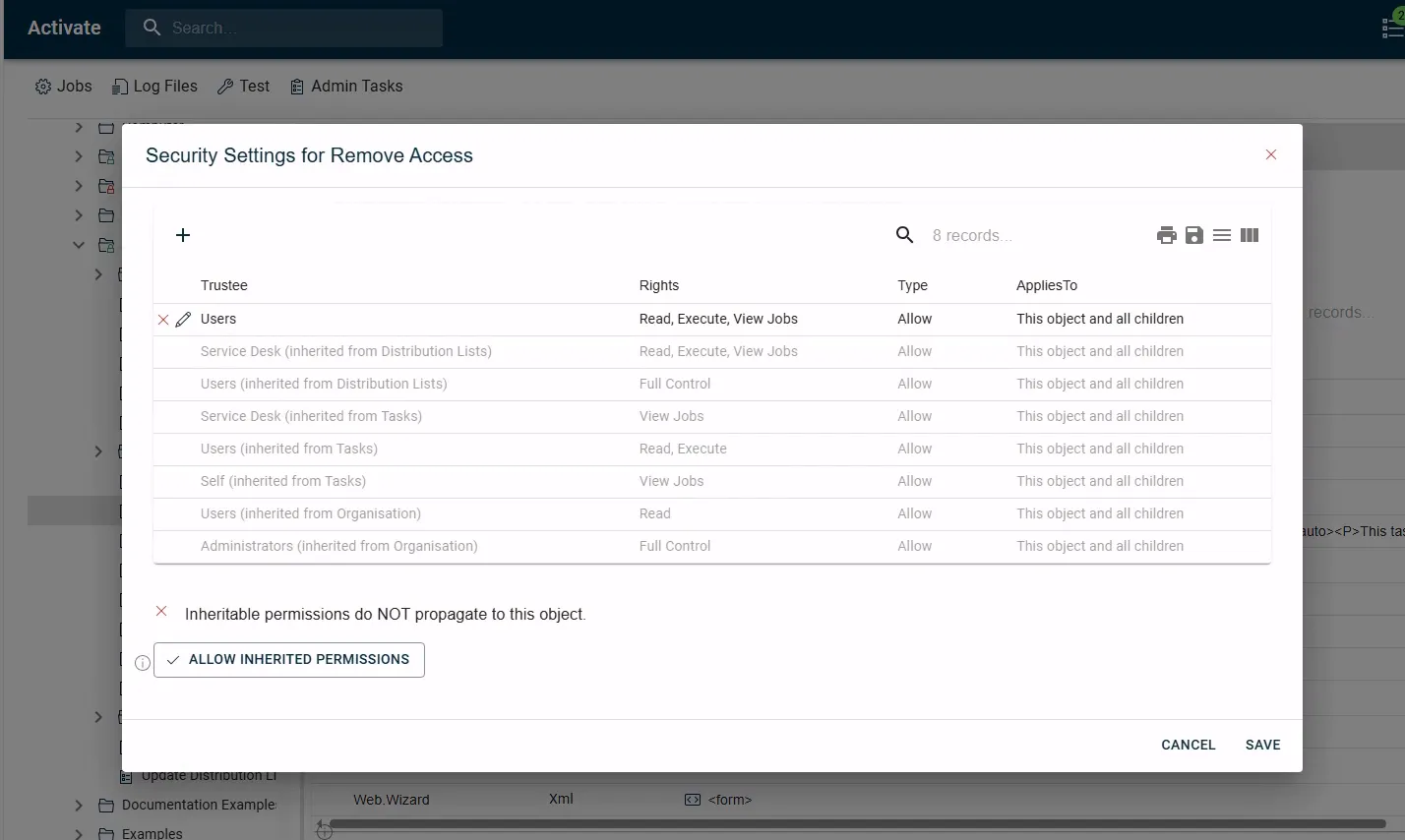
Activate includes a comprehensive security and permissions framework that allows organisations to create custom roles and assign permissions to specific tasks or object types.
Permissions can be scoped to defined responsibilities, allowing organisations to align platform access with internal policies and operating models rather than relying on a fixed role structure.
Default Access Model
By default, users have read-only access to designed objects within Activate.
Additional role memberships are required to create or modify objects such as service catalogue items, workflows, or administrative configuration. This default posture reduces risk and ensures that elevated access is granted intentionally.
Read-only access applies to designed objects only. Users can still participate in workflows as approvers or request targets without design or administrative permissions.
Workflow Design Governance
The ability to create or modify workflows is restricted to elevated roles only.
Users without these roles cannot alter workflow logic or configuration, but they can still participate in workflows as approvers or as the target of a request. This separation ensures collaboration without exposing design or governance controls.
Activate Studio Access Controls
Activate Studio provides web-based administrative capabilities for system configuration and the design of tasks, services, and workflows.
Access to Activate Studio is locked down out of the box and restricted to System Administrators. This ensures that administrative and design functions are clearly separated from operational usage.
Audit Logging and Change History
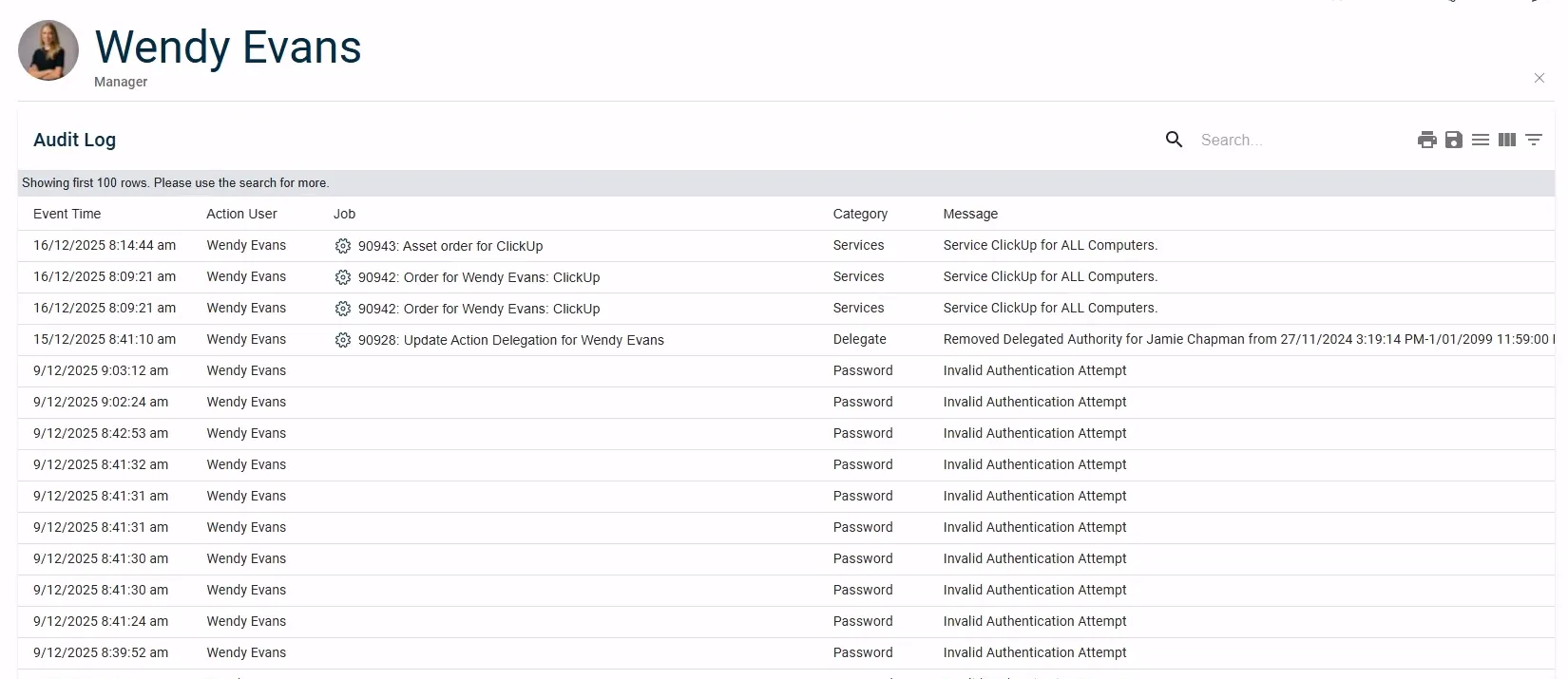
Activate provides robust audit logging for both jobs and users.
The platform records the history of actions performed against an object, such as a job, as well as actions performed by an object, such as a user. This supports traceability and operational oversight.
All configuration parameters within Activate maintain unlimited change history, including who made a change, when the change occurred, and what was modified. Changes are captured using a diff mechanism to provide precise visibility into configuration evolution over time.
Governance Summary
Activate’s enforced role separation, controlled access to design capabilities, configurable permissions, and comprehensive audit history provide strong support for enterprise governance and operational control.
These capabilities enable low-code configuration and business participation while maintaining IT oversight, consistency, and accountability.